
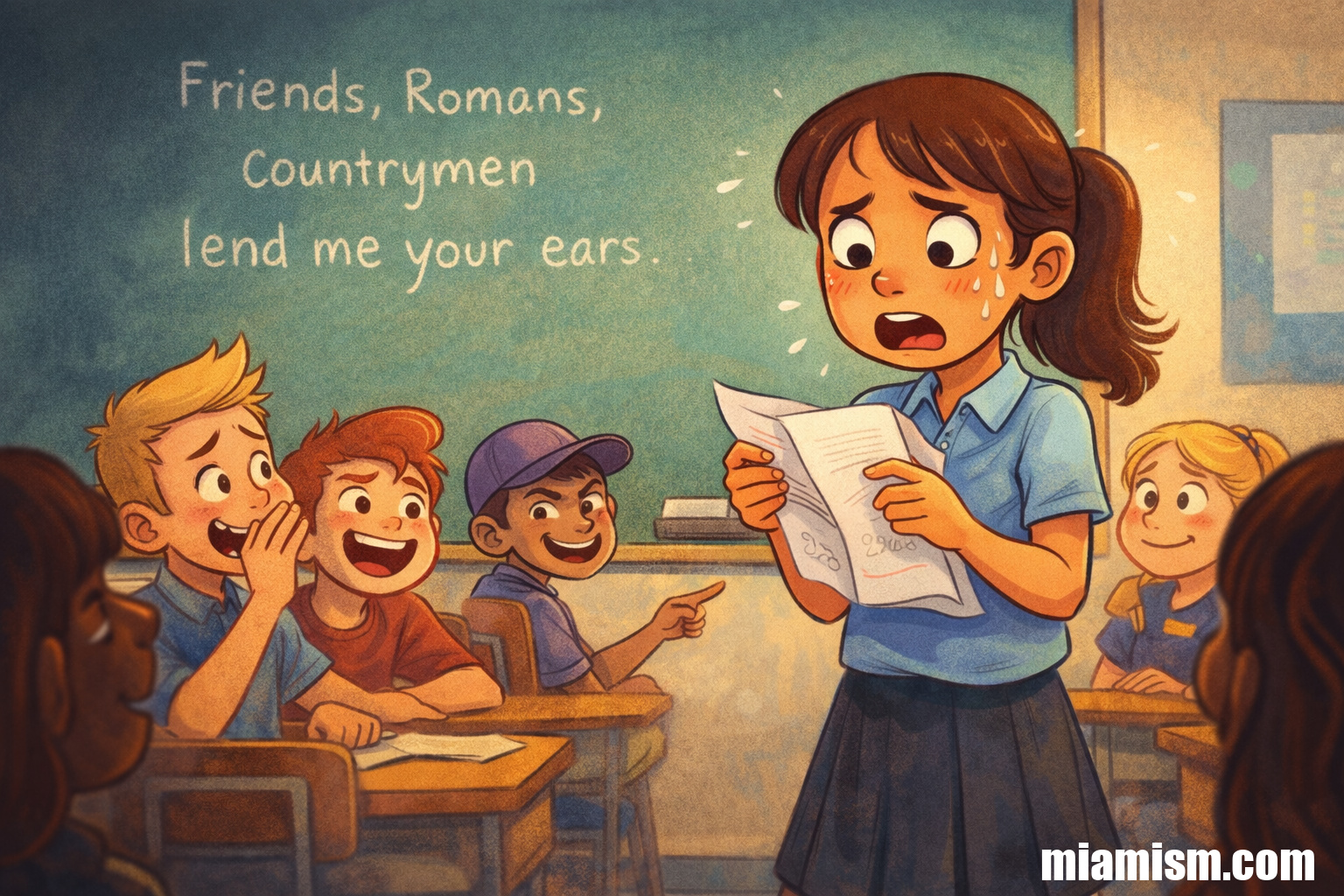
Friends, Romans, countrymen, lend me your ears.
I was eleven years old, barely spoke English, and somehow found myself memorizing and reciting Shakespeare’s Julius Caesar in front of a classroom full of Miami Country Day middle schoolers who were, let’s be honest, not exactly gentle.
Mr. Camp did not excuse the newly arrived Venezuelan immigrant from that assignment, and I didn’t expect him to. It was brutal, terrifying, and wildly unfair, yet more than forty years later I still know that monologue by heart.
That moment taught me something early. You don’t grow by avoiding discomfort. You grow by walking straight into it.
At the time, I didn’t fully understand why my parents had uprooted our lives or why they left Venezuela when, from my kid perspective, everything felt perfect. And it really was. We had great schools, close family, friends, vacations, a beautiful home. My dad was a civil engineer with a strong corporate career in the oil industry, my mom held an executive position at a major bank, and we weren’t struggling, we were thriving.
So why leave?
The answer came later.
One night, my parents were driving home from a cocktail party when their car was shot at, robbers waiting around a curve. They made it home unharmed, but I still remember the bullet dent in the car the next morning and my mom saying, very calmly and very clearly, “We are not safe. Our kids are not safe.”
That was it.
I can only imagine the months that followed, the planning, the fear, the quiet conversations adults think kids don’t hear. Leaving a perfect life for uncertainty is not a small decision, it’s a terrifying one.
As a child, I didn’t carry that weight. My struggle was simpler: missing my friends, missing the life I knew, and surviving Shakespeare in a foreign language.
My parents did everything the right way, work visas, immigration attorneys, thousands of dollars, years of paperwork, green cards, and eventually citizenship.
I still remember the first time I heard the Pledge of Allegiance, right hands over hearts, voices in unison. It still gets me every single time. To me, it represents something very specific: the belief that a better life is possible and that the easy path is rarely the one that gets you there.
I kept my Venezuelan roots close through summers in Caracas with my cousins, lifelong friendships from Emil Friedman, Spanish at home, and pride in where I come from. My kids are bilingual and have always known their heritage.
And I’m American, fully. Even with all the noise and division, this country gave my parents something they couldn’t guarantee anymore elsewhere: safety and the ability to build without looking over their shoulders.
My hope is simple, that I never have to make the same impossible decision my parents did, and that if I ever do, I have even a fraction of their courage.
Because immigration stories aren’t about borders. They don’t always start with desperation, but with foresight.