
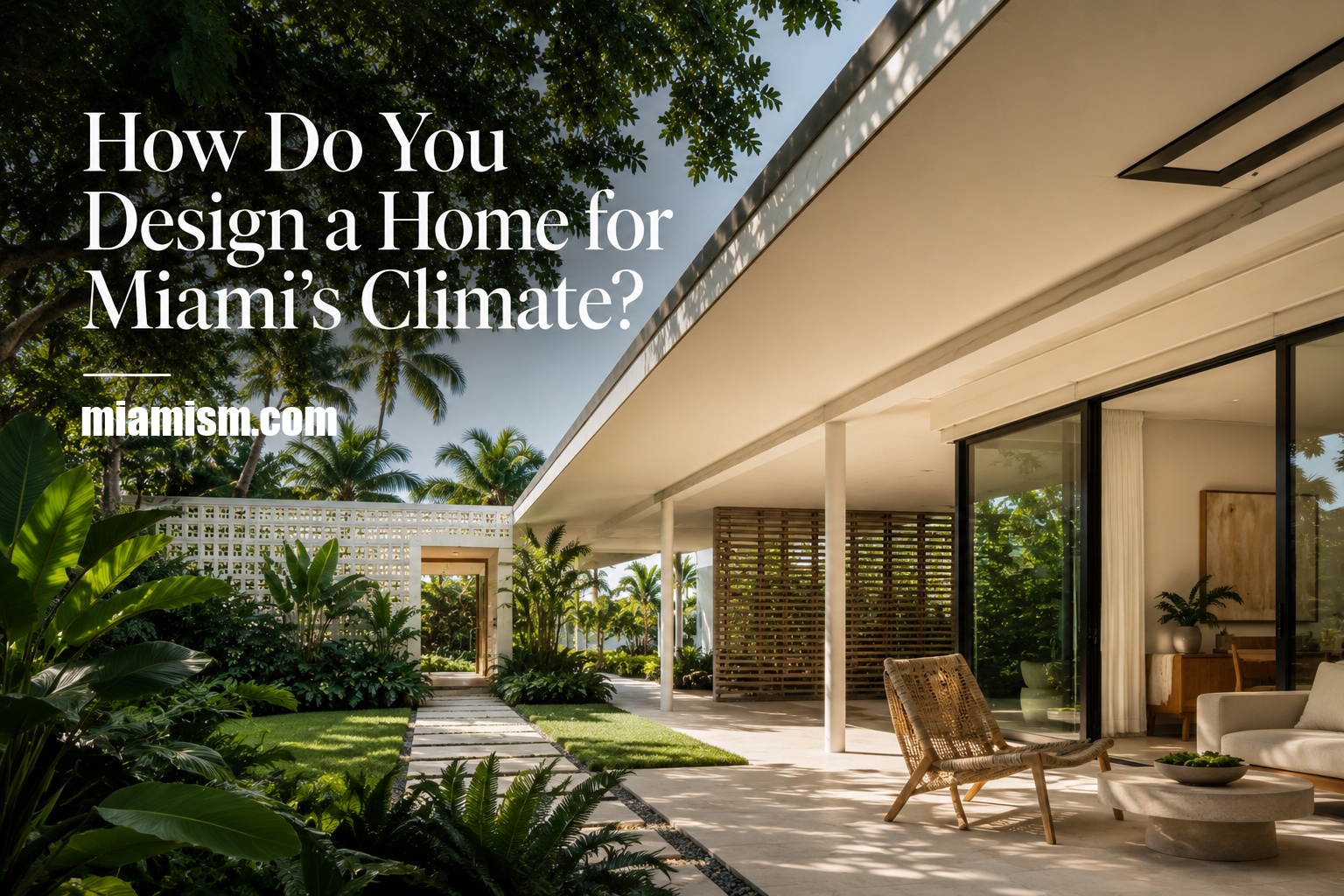
Architectural features that make Miami homes more comfortable, sustainable, and valuable
I was recently quoted in an article about home features that matter most in hot-weather markets. The question got me thinking about a topic I’ve been passionate about for years, both as an architect and Realtor:
How Do You Design a Home for Miami’s Climate?
The short answer is simple: you design with the climate, not against it.
Deep roof overhangs, covered outdoor rooms, cross ventilation, strategic window orientation, interior shading, solar control, and thoughtful landscaping can all help improve comfort, livability, sustainability, and cooling efficiency. The best Miami homes aren’t just equipped for the climate. They’re designed for it.
My answer in the article was this:
“As a trained architect, I often find myself pointing out the less obvious design features that can have an equally meaningful impact on comfort, sustainability, and energy efficiency. Deep roof overhangs, covered outdoor rooms, cross ventilation, window orientation, interior window treatments, solar shades, window tints, and the right trees and landscaping around a home can all help manage heat, improve livability, and lower cooling costs. The best homes aren’t just equipped for the climate, they’re designed for it.”
That last sentence is the one that matters most.
The Most Overlooked Features in Miami Home Design
Living in Miami means accepting that air conditioning is part of everyday life. But some homes are simply more comfortable than others, and it’s usually because someone thought about the climate long before the first owner moved in.
As both an architect and Realtor, I often find myself looking at things most buyers overlook. How deep are the roof overhangs? Where does the afternoon sun hit? Is there a covered outdoor space you’ll actually use in August? Do mature trees help shade the home? Does the architecture work with the environment or constantly battle against it?
These details rarely make the listing description, yet they can have a bigger impact on daily life than many of the upgrades buyers focus on.
What Miami’s Mid-Century Architects Understood
It’s one of the reasons I’ve always been drawn to South Florida’s Mid-Century homes. Architects like Alfred Browning Parker and Wahl Snyder understood that good design in Miami starts with understanding Miami. Their homes embraced shade, airflow, outdoor living, and a connection to the landscape long before sustainability became a marketing term.
Some of the smartest homes in South Florida aren’t necessarily the newest. They’re the ones that respond thoughtfully to where they are.
Why These Features Matter in Real Estate
One of my favorite parts of showing homes is helping buyers see beyond the obvious. Anyone can notice a renovated kitchen. Not everyone notices the mature oak tree protecting the western exposure, the covered terrace that stays comfortable year-round, or the way a home captures breezes and natural light.
Those are the details that often separate a house that’s merely located in Miami from one that’s truly designed for Miami.
And in my experience, those are the homes people fall in love with.
It’s also one of the reasons many of our clients choose us when buying or selling a home. We don’t just look at square footage, finishes, or comparable sales. We look at how a home lives, how it responds to its environment, and how thoughtful design can influence comfort, livability, and long-term value.
Because in Miami, good architecture isn’t a luxury. It’s a response to the climate.
Key Features of a Home Designed for Miami
If you’re evaluating a home in South Florida, pay attention to:
- Deep roof overhangs
- Covered outdoor living spaces
- Cross ventilation
- Window orientation
- Interior window treatments
- Solar shades and window tints
- Mature shade trees
- Climate-responsive landscaping
- Indoor-outdoor living spaces
- Natural light without excessive heat gain
If you’re interested in the topic, take a look at the full article and the perspectives shared by professionals from other hot-weather markets around the country.