
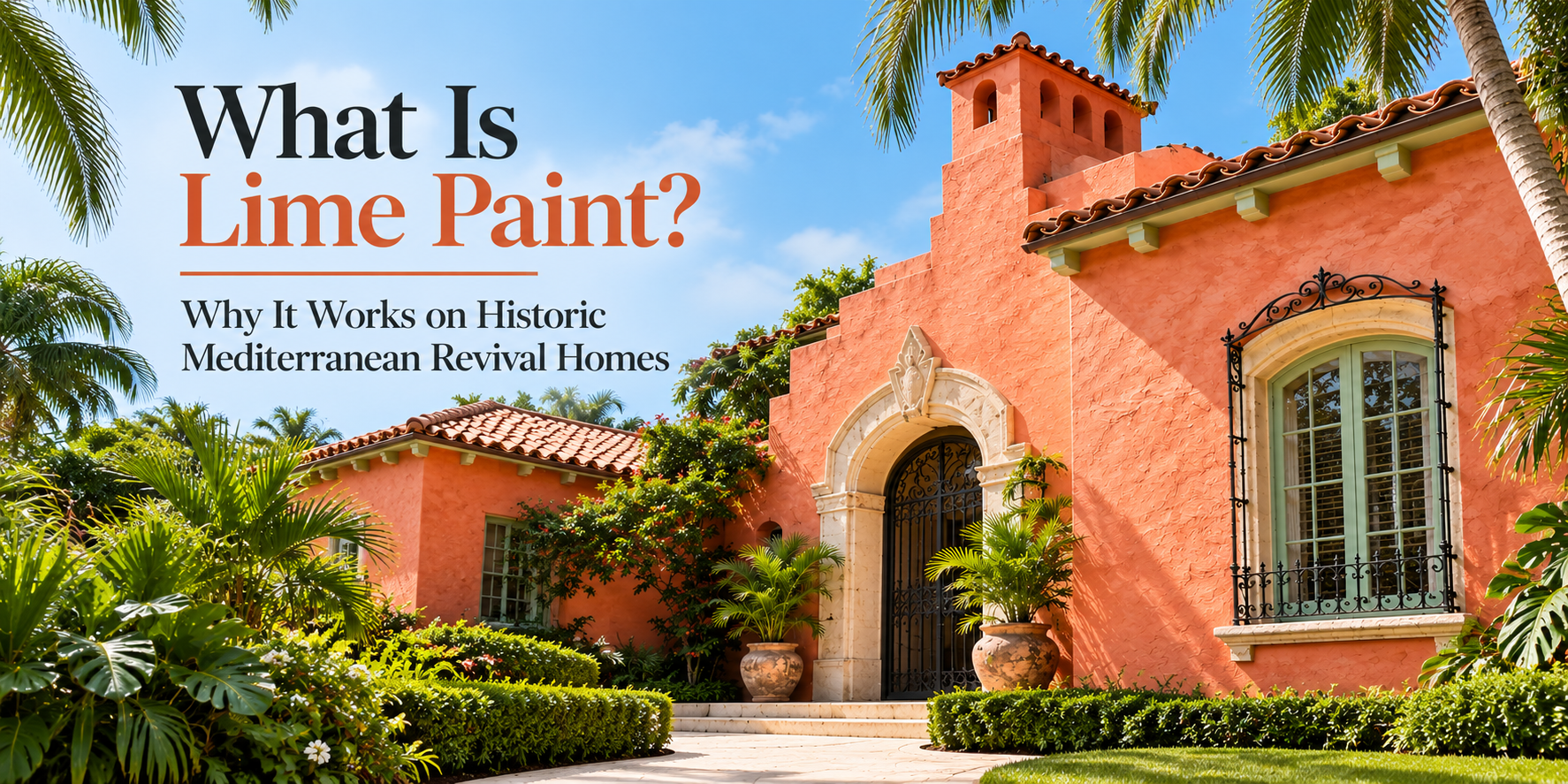
There are several key elements you see in Mediterranean Revival architecture. I’ve told you about the style and what makes it special, and I’ve gone into detail about Historic Cuban Barrel Tile. Now let’s talk about another important element: lime-based paint.
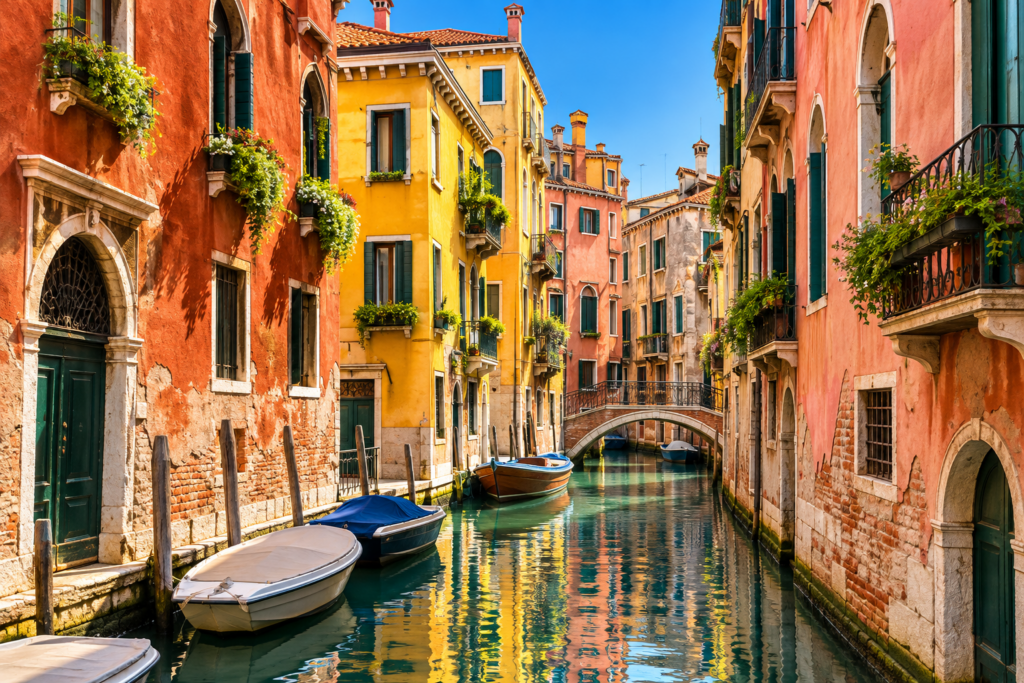
I don’t know about you, but when I think Mediterranean, I think of Venice. OK, it’s the Adriatic Sea… let’s not get technical here. I’m doing this to make a point about COLOR.
What Is Lime Paint?
In the Mediterranean and surrounding areas, it was customary to finish stucco facades with lime-based paints. Lime was also incorporated into stucco and plaster surfaces with different hues, creating finishes that became part of the architecture rather than simply a coat of color sitting on top of it.
The nature of these finishes is what gives historic building exteriors so much depth and personality. The surfaces are ever-changing depending on the intensity of the sun or rain. When studying facades finished with lime, you may see darker lines, wear patterns, discolorations and an uneven quality to the surface.
This is what makes lime so beautiful.
There is a rustic, aged look that goes hand in hand with lime paint. If you want a clean and perfectly uniform finish, lime-based paint is NOT for you!
Why Is Lime Paint Appropriate for Mediterranean Revival Homes?
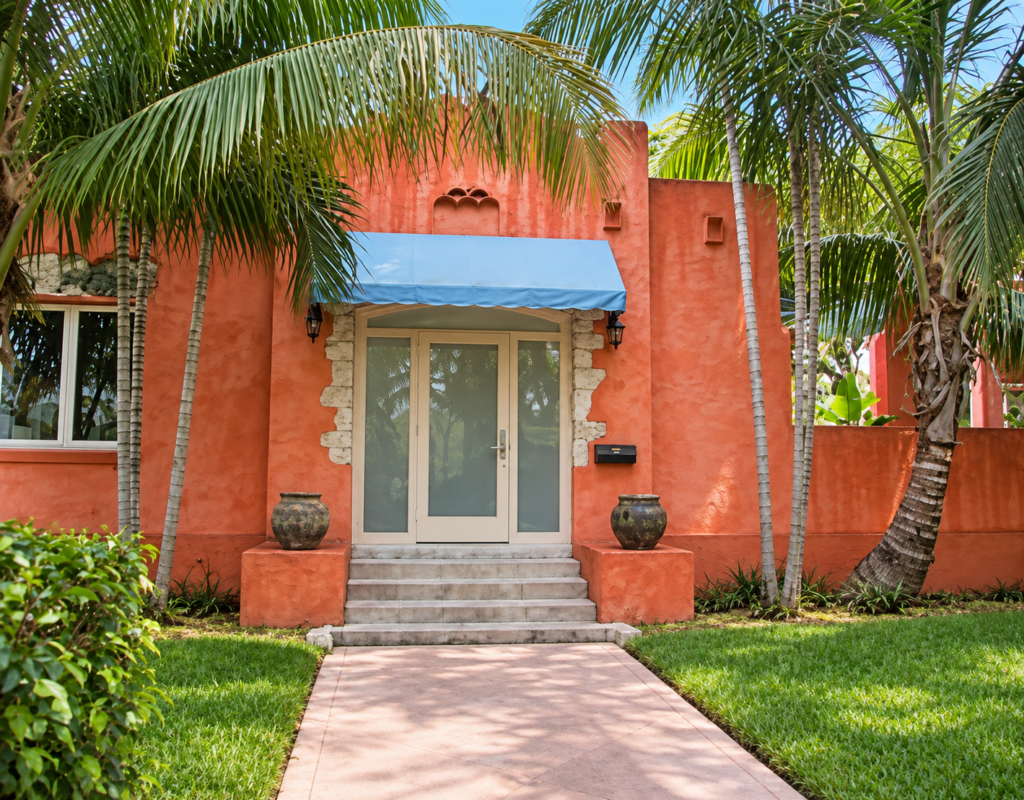
Lime finishes work particularly well with Mediterranean Revival architecture because the variation and weathered appearance are consistent with the character of the architecture. Instead of making an old stucco facade look newly coated and perfectly uniform, lime gives it depth, movement and that aged quality that looks like it belongs there.
And then there’s color. Ochre yellow, terracotta orange and olive green are examples of the stronger hues associated with these traditional finishes.
Historic Preservation and Lime Paint in Miami
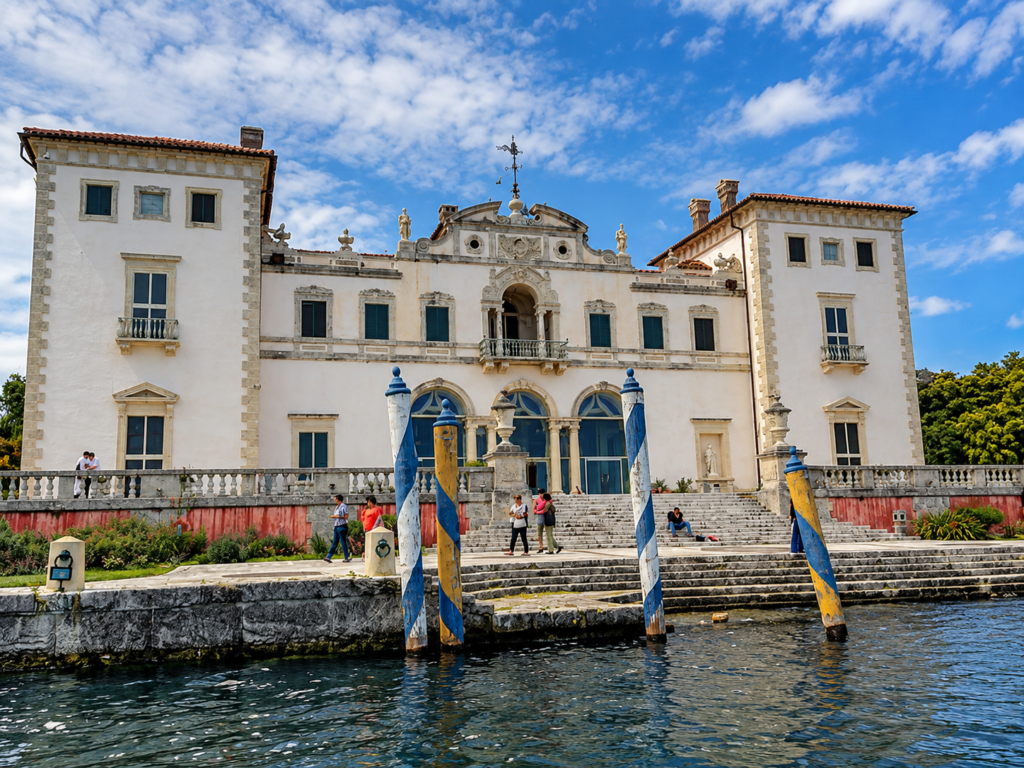
While serving on the Historic Preservation Board in Miami Shores, I often recommended lime-based paints to homeowners of Mediterranean Revival homes. This ended up turning into a very controversial subject because the city did not agree with some of the stronger hues customary to the style, including ochre yellow, terracotta orange and olive green, nor did they want a “weathered look” on these homes.
That’s an important lesson for anyone restoring a historic home in Miami. What may be historically appropriate and what a particular municipality will approve are not necessarily the same thing.
Before beginning an exterior restoration, check with the appropriate local historic preservation and building authorities to understand what will be permitted for your particular property.
Where Can You Find Lime Paint in Miami?
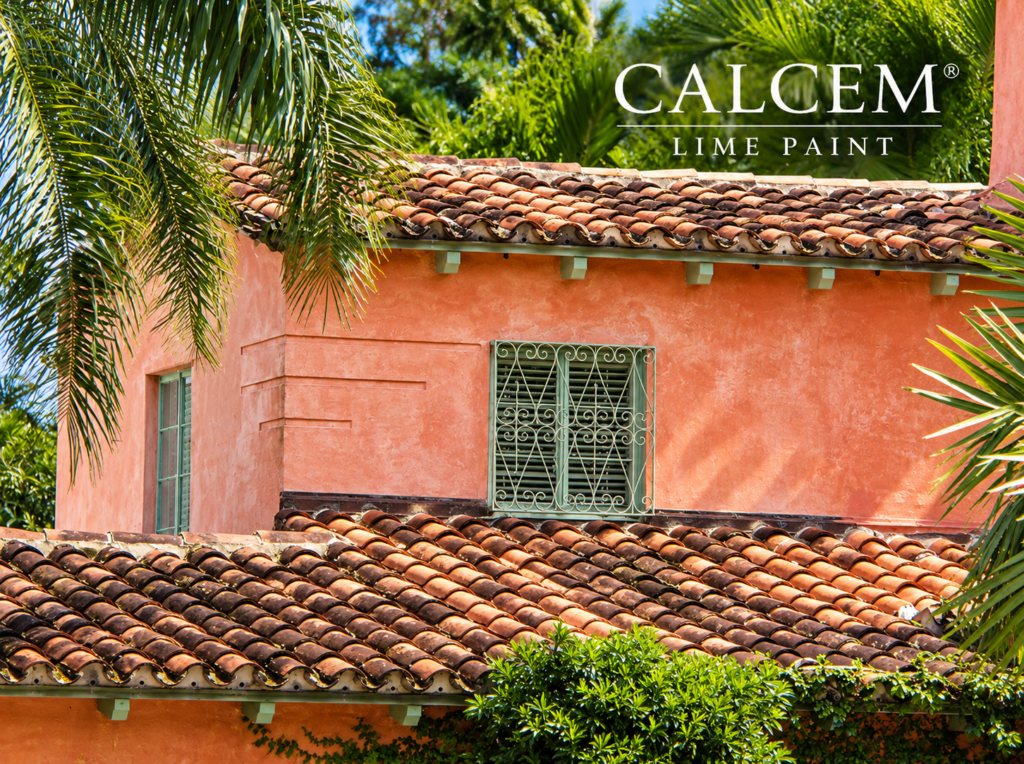
One local source I’ve written about over the years is Emilio Cianfoni, who developed a registered product called Calcem Lime Paint. His work has included prominent Miami properties such as Vizcaya, Ca’ Ziff and Fairchild Tropical Botanic Garden.
Lime paint is not cheap and the application is not easy, so make sure your painter understands what it entails, especially the prep work involved.
It’s also important to note that although we’re talking about lime paint in the context of historic homes, it isn’t limited to historic architecture. Lime finishes have also become popular in contemporary design and for interior applications.
The Miamism Take
I personally find that lime paint adds not only character to historic facades, but that perfect finishing touch that completes a restoration.
The unevenness isn’t something that needs to be corrected. The changes in tone, weathering and imperfections are part of what make the finish interesting. If you’re restoring a Mediterranean Revival home, that’s precisely the point.
Frequently Asked Questions
Is lime paint supposed to look uneven?
Yes. Variation in color, weathering and tone is characteristic of a lime finish. If you’re looking for a completely uniform painted surface, lime paint may not give you the look you want.
Can lime paint be used on modern homes?
Yes. Although lime finishes have a long history and work beautifully with historic architecture, they’re also used on contemporary homes and interior surfaces.
Do I need approval to use lime paint on a historic Miami home?
Possibly. Requirements depend on the property, its historic designation and the municipality. Check with the appropriate local authorities before beginning exterior work on a designated historic property.
Selling a Historic Miami Home?
Knowing that a facade is lime-painted, recognizing original Cuban tile or understanding why a particular window matters may seem like small details, but they’re exactly the kinds of details that help us understand what we’re selling.
Historic and architecturally significant Miami homes are our niche. If you’re thinking about selling yours, call us. We know the architecture, we understand the product and we know how to communicate what makes your home special to the buyers who will appreciate it.
Originally published August 13, 2007 and updated for Miamism.
Leave a Reply
You must be logged in to post a comment.